5/11/12 Lemon Verbena Jelly
|
This recipe calls for lemon verbena, but you can easily substitute other herbs, such as sage, rosemary or mint. |

|
2 1/2 pounds tart apples
2 cups water
Sugar
Lemon Juice
4 oz. fresh lemon verbena, or 2 oz. dried
White wine vinegar (optional)
1. Roughly chop the apples, leaving the skin on and including the seeds and stems. Put the apple pieces into a heavy saucepan and add the water. Simmer very slowly until the apple has collapsed and is cooked thoroughly. Take care that they don't burn or stick to the pan.
2. Strain the apple through a jelly bag or a double layer of cheesecloth. Do not press the pulp or the juice will become cloudy. Leave to strain overnight or for several hours. Measure the juice.
3. To each 2 1/2 cups juice add 2 cups sugar, the juice of one lemon, a 3 tablespoons chopped fresh herb (1 1/2 if using dried). (If using mint or lemon thyme, you may add 1 tbsp vinegar at this point.) Put the mixture into a heavy pan, bring to a boil and boil rapidly until the jelly reaches a setting point.
4. Pour into clean jars while still hot, leaving a 1/4 inch space at the top. Wipe the rims of the jars and put on lids and screw down the bands firmly. Place the jars on a rack in a deep kettle half-full of boiling water - or enough to cover the jars by 2 inches. Cover the kettle, bring to a rolling boil, and boil 15 minutes, reducing the heat if necessary. |
|

|
Certified Organic Lemon Verbena |
|
Kitchen Tools |
|

|
| Bag Dryers |
| Boxes |
| Cheesecloth |
| Funnels |
| Infusers | & More... | | 1/21/12
| Healing Properties of |
 |
|
Cumin |
|
| Not to be confused with the seeds of Carum carvi (caraway) or Bunium persicum or Nigella sativa, both of which are erroneously referred to as black cumin, an herb used in traditional Chinese medicine. |
| Cumin (Cuminum cyminum) is a member of the parsley family and a staple in Indian and Mexican cuisines. It is native to Turkistan and northern Egypt, now cultivated throughout the Mediterranean, Iran, Pakistan, China, South America and the U.S. |
 |
Cumin seeds were traditional wedding fare in ancient Greece and Rome because the herb was believed to promote fertility and fidelity. Warriors were fortified with loaves of cumin seed bread while they prepared for battle. |
|
Certified Organic Cumin Seeds |
|
 Certified Organic Cumin Seed, Powdered
 |
In traditional herbal medicine, cumin is used as a diuretic to stimulate increased urine output and as a carminative to treat gastrointestinal complaints, such as upset stomach, bloating, gas and diarrhea. It is also used in holistic veterinary medicine to address colic. In Ayurveda, the traditional system of healing in India, cumin is used to treat bladder and kidney stones, leprosy and eye diseases. |
| Cumin contains several active compounds that lend the herb medicinal properties. The presence of fatty oils produce antimicrobial and analgesic effects. Extracts of cumin ether have been found to inhibit platelet aggregation in human plasma in vitro (in cultured cell samples).
Studies have shown that cumin may reduce the risk of developing liver or stomach cancer. The seeds, which are a rich source of iron, appear to stimulate metabolism by increasing the secretion of pancreatic enzymes. However, people with a history of peptic ulcers, gallstones or bile duct obstruction should avoid or limit the consumption of cumin. |
|
Pharmacology |
|
Summary
Cumin is antimicrobial, diuretic, carminative, analgesic, stimulating to the metabolism and influences blood clotting. An acetone extract of cumin was found to exert estrogenic effects in female albino rats that had their ovaries removed, resulting in an increase in uterus weight.
|
|
 |
Constituents | |
|
|
|
Typical Preparations | |
|
|
|
Precautions | |
|
| Volatile oils (up to 5%): cuminaldehyde, gamma-terpenes, beta-pinenes, p-cymene
Fatty oils (up to 15%): palmitic acid, petroselic acid
Proteic substances (up to 20%) |
Used internally and topically, in ground form or pressed oil. The seeds are used in cooking. |
There are no significant health risks recorded. However, because this herb may increase pancreatic function, consult a health care practitioner before using if you have ever had stomach ulcers, gallstones or a blocked bile duct. |
|
Shop Certified Organic Herbs | 1/15/12
| Healing with |
 |
|
meadowsweet |
|
| Other Common Names: Dropwort, Bridewort, Queen of the Meadow, Trumpet weed, Rios Cuchulainn, Meadow wort, Drop wort, Pride of the Meadow. |
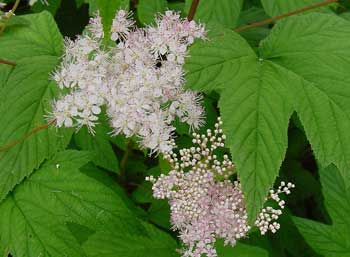
| The sweet, almond-scented blooms of meadowsweet (Filipendula ulmaria) are rich in salicin, a compound with potent natural pain-relieving and anti-inflammatory properties. In the 1800s, chemists began tinkering with extracts of meadowsweet, and the result was the creation of the synthetic drug aspirin. |
 |
Meadowsweet, water-mint, and vervain were three herbs held most sacred by the Druids, along with vervain and water-mint..
|
|
|
|
 |
Although meadowsweet isn’t as powerful as aspirin, it also doesn’t cause the stomach irritation for which aspirin is notorious. In fact, meadowsweet often is used to soothe the mucous membranes of the digestive tract and is recommended to relieve excessive stomach acidity and to treat diarrhea.
Its historical medicinal uses are confirmed enough that it is licensed as a standard medicinal tea in Germany by the German E Commission, which wrote that it is used as a supportive ingredient for fever and common colds, and appears as an ingredient in herbal preparations for treating influenza, rheumatism and kidney and bladder complaints. |
|
"It is reported that the floures boiled in wine and drunke do take away the fits of a quartaine ague and make the heart merrie. The distilled water of the floures dropped into the eies taketh away the burning and itching thereof and cleareth the sight." -- Gerard |
 |
Meadowsweet is one of fifty ingredients in a drink called 'Save,' mentioned in Chaucer's Knight's Tale, and the flowers were often steeped in wine and beer. It is still incorporated in many herb beers today. |
|
Pharmacology |
Summary
Meadowsweet has a long tradition of use in folk medicine as a treatment for coughs and colds. Its astringent and demulcent properties have been borne out by research, and the German government recognizes meadowsweet tea as a treatment for colds and coughs. Meadowsweet contains salicylic acid, the main constituent in aspirin, and has its analgesic and fever-reducing properties. Meadowsweet is also traditionally used to relieve pain associated with rheumatism, menstrual cramps, headache, arthritis and low grad fever. It also seems to be effective against bacteria that causes diarrhea and may inhibit blood clotting.
|
|
|
|
 |
Constituents | |
|
|
|
Typical Preparations | |
|
|
|
Precautions | |
|
|
Salicin, polyphenolic tannins, especially rugosin-D; 0.5-1.0% flavonoids, quercetin and kaempferol derivatives; phenolic glycosides, mostly spiraein and monotropitin, the primeverosides of salicylaldehyde and methyl salicylate, also isosalicin, a glucoside of salicyl alcohol; volatile oil, mainly; mucilage; and ascorbic acid |
In tea infusions, as a capsule or extract and sometimes included in food. The flowers are used as a natural sweetener for teas, foods and other beverages. |
Since meadowsweet contains small amounts of salicilate, it should not be used by people with a sensitivity to aspirin or similar products. For the same reason, it should not be used by children under the age of sixteen with high fevers, particularly if the cause may be viral, because of the rare but very real risk of Reyes syndrome. It is not recommended for use by those taking blood thinning medications. | |

Sometimes referred to nature's aspirin, meadowsweet is one of the most common herbs, growing wild throughout Europe and Asia, and naturalized to grow throughout North America's Eastern coast.
 |
|
Shop Certified Organic Herbs | 12/13/11
| The Magickal Properties of |
 |
|
clear quartz |
|
|
Quartz is certainly beautiful too look at, but it has other properties to admire. It cleanses, heals, amplifies and channels energy and increases perception -- and you can learn how to harness its powers. |
| Clear quartz is associated with enhancing psychic abilities, spiritual communication and to promote healing. This is because the gemstone is a natural conductor of energy, which is why it used to power your watch and electrical equipment. Crystal balls are made from quartz because the material serves as a window into other dimensions, granting the viewer clear vision to determine the cause of an illness, learn of potential solutions to current obstacles and to receive other information. |
 |
The word "crystal" is taken from the Greek "krystallos," which means ice. The ancient Greeks believed that clear quartz was literally a form of ice somehow fixed in a permanent frozen state.
|
|
| Just as clear quartz is compared to glass, it also has properties similar to water in the sense that it cleanses or washes away negative vibrations from the body and the environment. |
 Just as quartz channels radio waves, it gathers and directs psychic energies.
 |
Quartz is thought to bridge the physical and ethereal worlds, giving its user a glimpse into past and future times, events and places. For this reason, clear quartz is used to assist the traveler in astral projection and psychic dream journeys.
|
Wearing Quartz as Jewelry |
|
| Because quartz enhances powers of perception, it is best worn near the head -- short pendants, earrings, etc. |
 | |
|
Using Quartz to Aid Psychic Abilities |
| ~ Gently rub or hold quartz against your brow to "light up" your crown chakra, the energy center located at the top of your head.
~ Meditate in a prone position with a piece of clear quartz positioned at your crown chakra while concentrating on expanding awareness.
~ Gain inspiration and insight by placing quartz against your third eye, which is located at the center of your forehead.
~ Hold quartz in your palm before sleep or place it under your pillow to enhance psychic dreams and your ability to remember them. |
 |
|
Clear Negative Energy |
|
 |
Quartz is piezoelectric, which means it disperses negative energy from its surrounding environment because it produces an electric charge when compressed.
~ Carry quartz to repel negative energy away from you, cleanse your environment and shield you from the effects of daily stress.
~ Place a quartz crystal on top of your computer to keep it running smoothly. |
|
Healing with Quartz |
|
| ~ Just as quartz channels psychic energy, it also draws and directs positive, healing energy toward the site of dis-ease. This is why clear quartz is the gemstone most often used to make healing wands (usually combined with copper).
~ Rub or hold a piece of quartz against the afflicted area of the body while visualizing bright, warm, golden-white light traveling up from the Earth and along the spine, through your heart and out along the arms and through the crystal. Quartz will magnify the healing energy as it travels through the affected area.
~ Clear blocked chakra channels by passing quartz crystal over each energy center to "wash" them clean. |

|
|
Shop New Age, Wiccan & Pagan Supplies | 12/5/11
|
Lavender Soap Balls
Adapted from Herbal Body Book by Stephanie Tourles |
|
 |
|
Two 3.5 oz. glycerin soap bars, grated
2 tbsp. ground oatmeal
1 tbsp. dried lavender herb, crushed
1/ tbsp. dried lavender flowers
10 drops lavender essential oil
1 tbsp. anhydrous lanolin
1 tbsp. sweet almond oil
Oil for hands |
|
Melt soap, lanolin and oil on low heat in a double boiler or a small saucepan until softened, stirring occasionally. Remove from heat and stir in remaining ingredients.
While the soap mixture is still hot and soft, roll into balls (with oiled hands) about the size of a lime. Cool on wax paper. You can also make 2 round or square cakes of soap from this recipe. |
|
Get the Supplies to Make This...
Return to Herbal Musings: Tools for Natural Living | |